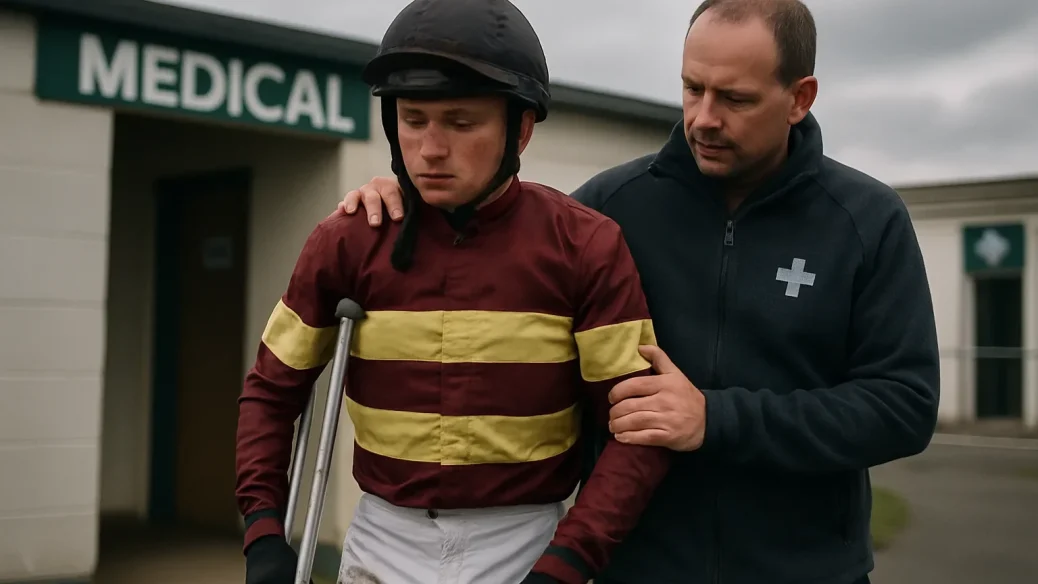
Dylan Browne McMonagle recovering and described as “in good spirits” after Bellewstown incident
Dylan Browne McMonagle has been reported to be in good spirits and making steady progress after a heavy fall in the opening race at Bellewstown on Tuesday which left his mount, Mosel, fatally injured. The meeting was later abandoned following a separate incident in the second race that resulted in two further fallers.
Medical update from Irish Horseracing Regulatory Board
Speaking on a racing podcast, Jennifer Pugh, chief medical officer for the Irish Horseracing Regulatory Board (IHRB), provided an update on the 22-year-old champion jockey’s condition. She said Browne McMonagle had had “a good night” and was in a “very stable” condition overnight, adding that he was doing “remarkably well given the seriousness of the fall.”
Pugh confirmed that Browne McMonagle will be sidelined for several weeks and outlined that return-to-ride protocols are individualised. “There are the standard return to ride protocols. It’s different for every jockey and it’s all very individualised (rehabilitation),” she said, adding that further information on his recovery would become clearer in the coming days.
Support and immediate response
Race-day medical and stewarding teams received public thanks in the update, with Pugh praising those who cared for the jockey at Bellewstown. She also emphasised Browne McMonagle’s demeanour following the incident, describing him as courteous and composed amid difficult circumstances.
His agent confirmed the jockey’s condition to press outlets on Wednesday, reporting that Browne McMonagle was walking and in good spirits. The agent said he had spoken with the jockey and that he had expressed appreciation for the messages of support he had received.
Broader context and safety considerations
The abandonment of the Bellewstown fixture after the second race underscores the immediate impact such incidents can have on a meeting. Equine fatality and jockey falls are among the most serious outcomes in jump racing, and they often prompt review by racecourse officials, veterinary teams and regulatory bodies.
Incidents of this nature typically lead to routine internal reviews and can also prompt wider discussion around course conditions, veterinary checks and race-day procedures. The IHRB and racecourse medical teams manage immediate care and coordinate follow-up assessments for jockeys and horses involved in serious falls.
What happens next for Browne McMonagle
- Immediate medical observation and rehabilitation: Pugh said the jockey’s rehabilitation will be tailored to his individual needs and that the team will monitor progress over the coming days.
- Clearance to return to racing: As with all serious falls, a formal process of medical assessment and clearance is required before a jockey can resume riding in public.
- Ongoing support: Both the IHRB and the racing community typically provide support to jockeys recovering from significant injury, including access to specialist clinicians and structured return-to-ride plans.
Racing community reaction
The immediate reaction within the racing world was one of concern and relief that Browne McMonagle’s condition was stabilised. Messages of support are a common response from fellow jockeys, trainers and racegoers in the aftermath of serious incidents, reflecting the close-knit nature of the racing community.
While the circumstances surrounding Mosel’s fatal injury and the separate fallers in the second race will be subject to routine enquiries, the priority remains the welfare and recovery of those affected. Updates are expected as medical assessments continue and the IHRB provides further information on Browne McMonagle’s recuperation.